
Strategic Turnaround: When Market Share Fell and Decisions Had to Change
After market share dropped from 85% to around 40%, a redesigned decision-making model stabilized more than R$1 billion in annual revenue.
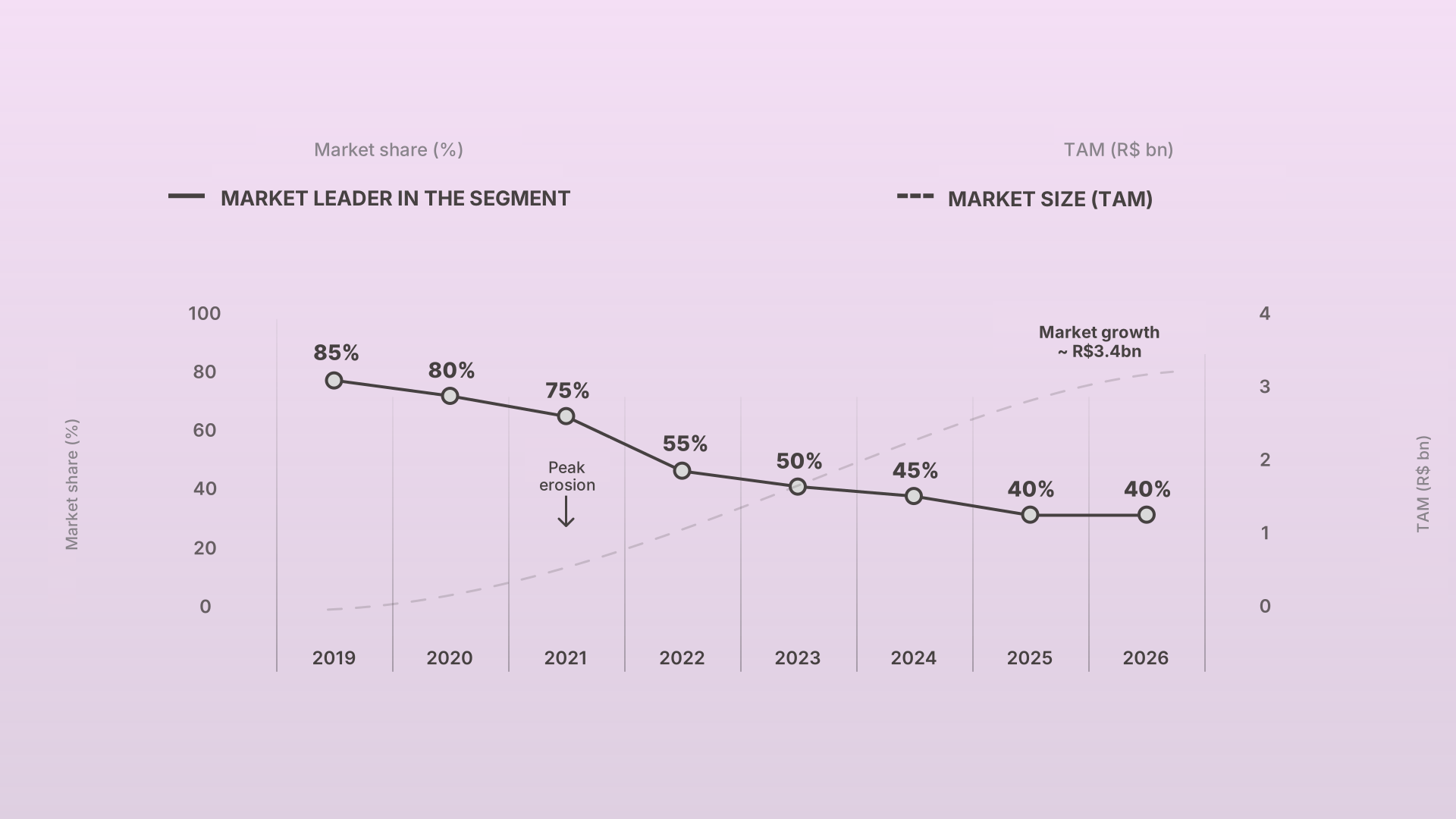
The decline slowed after 2022, and market share stabilized at around 40% as the overall market continued to grow.
Executive Summary
- •Context: Market share fell 35% while the market grew 40%.
- •Diagnosis: Reactive governance and fragmented decisions.
- •Action: I built an outcome-driven decision model.
- •Impact: R$1.2 billion in revenue protected, with the business structurally stabilized.
Strategic Landscape
Between 2020 and 2022, new entrants and business models accelerated the market while the company struggled to keep pace.
Internal Structure
- •An operation built around scale and volume.
- •Rigid time to market, with high transition risk for a critical student base.
- •Any structural change put the brand's prestige at risk.
- •Reactive decisions, technical debt, silos, and wasted student time—the scarcest resource.
- •No strategic alignment across teams, resulting in fragmented and inefficient decisions.
External Pressure & Impact
+40%
Growth in the number of candidates, increasing demand for performance and smarter solutions.
R$1.8bn
Estimated total addressable market from 2020 to 2022, accelerating the entry of new digital players.
−30%
The market-share decline exposed the real bottleneck: governance under competitive pressure.
How do you regain market leadership while the market grows 40% and your share keeps falling?
An Outcome-Driven Decision Model
Redesigned decision-making with measurable impact on revenue and market share:
46k
Student base stabilized
R$1.2bn
Annual revenue protected
~40%
Squads adopted discovery
How It Scaled
- •I established strategic design methods that began guiding roadmap decisions.
- •I trained product managers focused entirely on delivery to lead structured discovery.
- •I helped turn a delivery-focused culture into an organization able to frame problems before proposing solutions.
Decision Governance
- •I aligned engineering, design, and business around a shared logic of measurable impact.
- •I established research and reporting practices that shifted decisions from opinion to evidence.
- •I worked continuously with directors, the VP, and the CEO to define and sponsor structural initiatives.
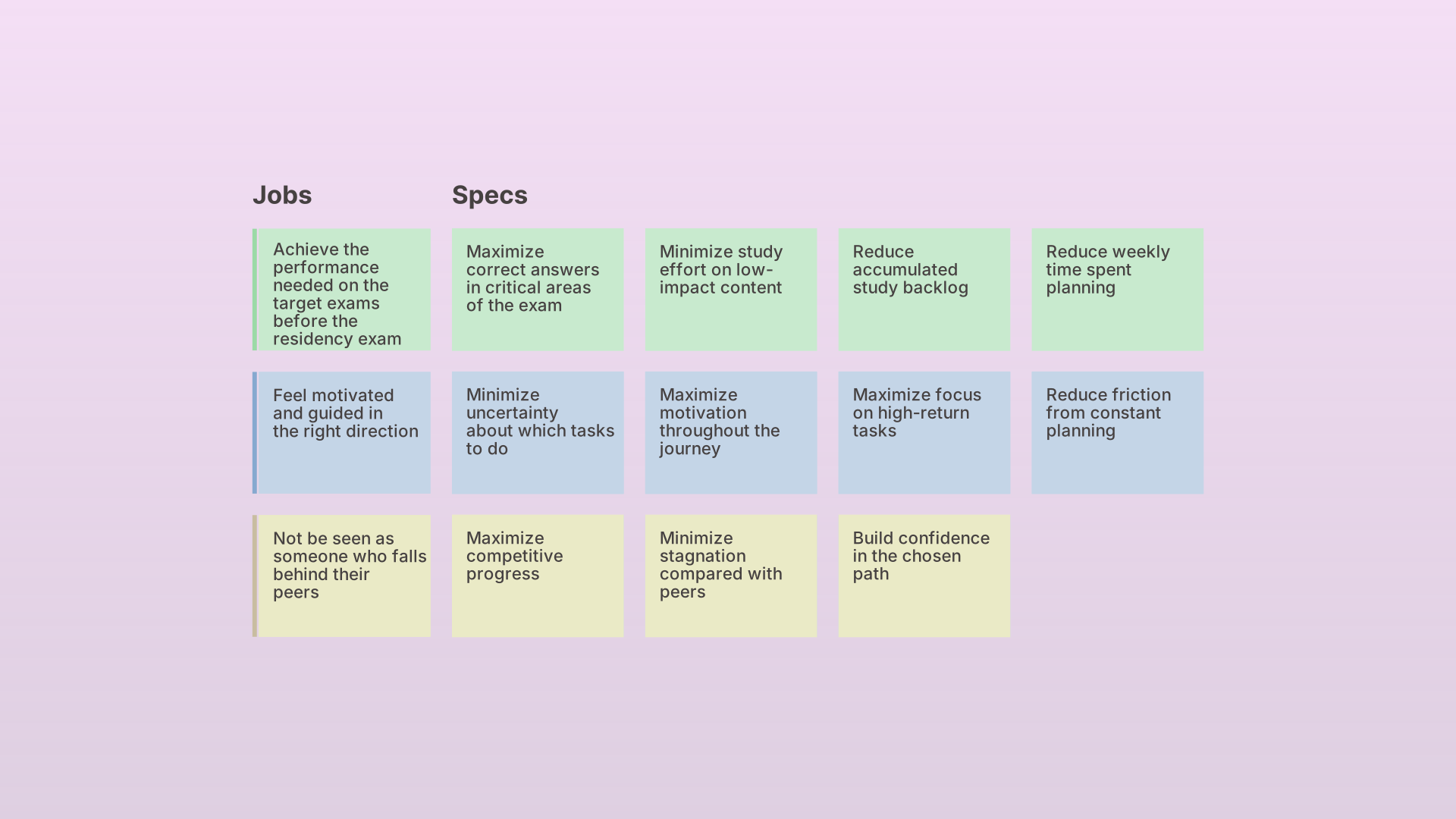
A decision-making framework that guided product strategy, discovery, and trade-offs. Content was synthesized and adapted to protect confidentiality.
“Once decisions became outcome-driven, product stopped being a bet and became a system.”
Principles & Insights
- •Governance: Product outcomes depend on decision quality and clear ownership.
- •Orchestration: Poorly defined processes drain hidden capacity.
- •Architecture: Scale comes from systems and frameworks, not individual effort.
- •Efficiency: Removing legacy constraints and competing initiatives frees operational capacity.
- Consolidated internal data (2020–2023). Total addressable market and market-share estimates are based on public industry reports. Strategic analyses and proprietary frameworks have been adapted to protect confidentiality.