
Strategic Architecture and Building Product Intelligence
From passive repository to learning system: turning scale into a strategic asset.
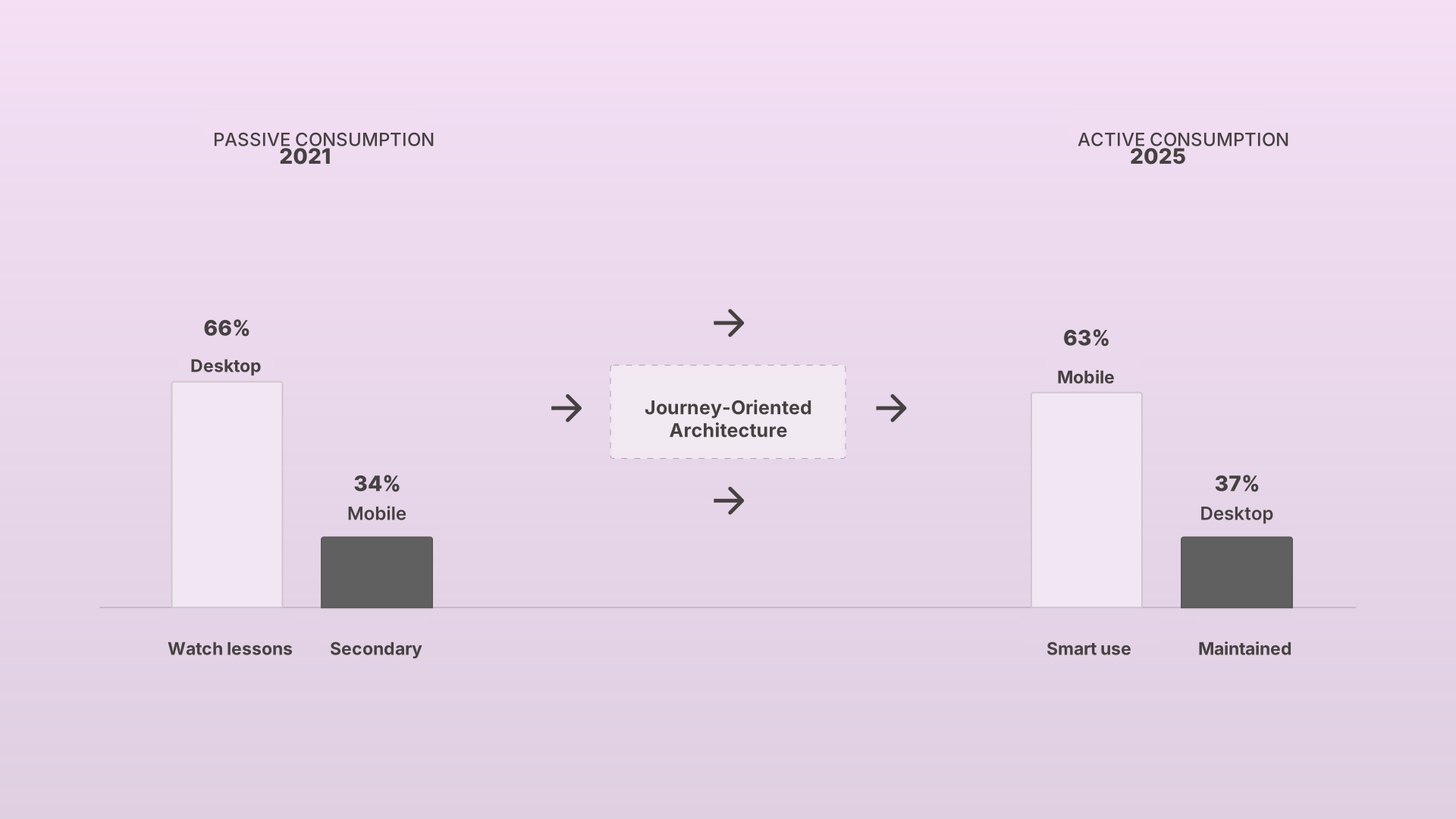
Reorganizing around student journeys shifted the experience from passive consumption to integrated, active practice. Intelligence became part of the workflow, reducing friction and bringing the experience together within the same ecosystem.
Executive Summary
- •Context: 46,000 students, fragmented architecture, and no intelligence capture.
- •Diagnosis: Strategy evolved while the architecture remained siloed.
- •Action: I reorganized the product around student journeys to capture strategic signals.
- •Impact: 50M+ actions monitored, 63% mobile usage, and 80% fewer critical technical incidents.
Strategic Landscape
The strategic shift called for a model that could support intelligence, not just operations.
Internal Structure
- •Fragmented architecture reflected decentralized, poorly integrated decisions.
- •The product was organized around content rather than the student journey.
- •Scale created maintenance work and complexity instead of intelligence.
External Pressure & Impact
- •Digital players were turning usage into a competitive advantage.
- •Personalization and continuous feedback had become strategic differentiators.
- •Scale without the ability to learn became a structural disadvantage.
How do you turn scale into a competitive advantage before it becomes irrelevant?
Product as a System
Scale became a continuous learning system, shifting passive consumption into an active, data-informed journey.
50M+
Actions monitored (2025)
63%
Mobile use across the active journey
80%
Fewer critical technical incidents
Scale as an Asset
- •Every interaction began generating a strategic signal.
- •Scale stopped being just volume and became a data asset.
Structural Reorganization
- •The architecture was realigned around journeys and goals.
- •We reduced legacy constraints to free up strategic capacity.
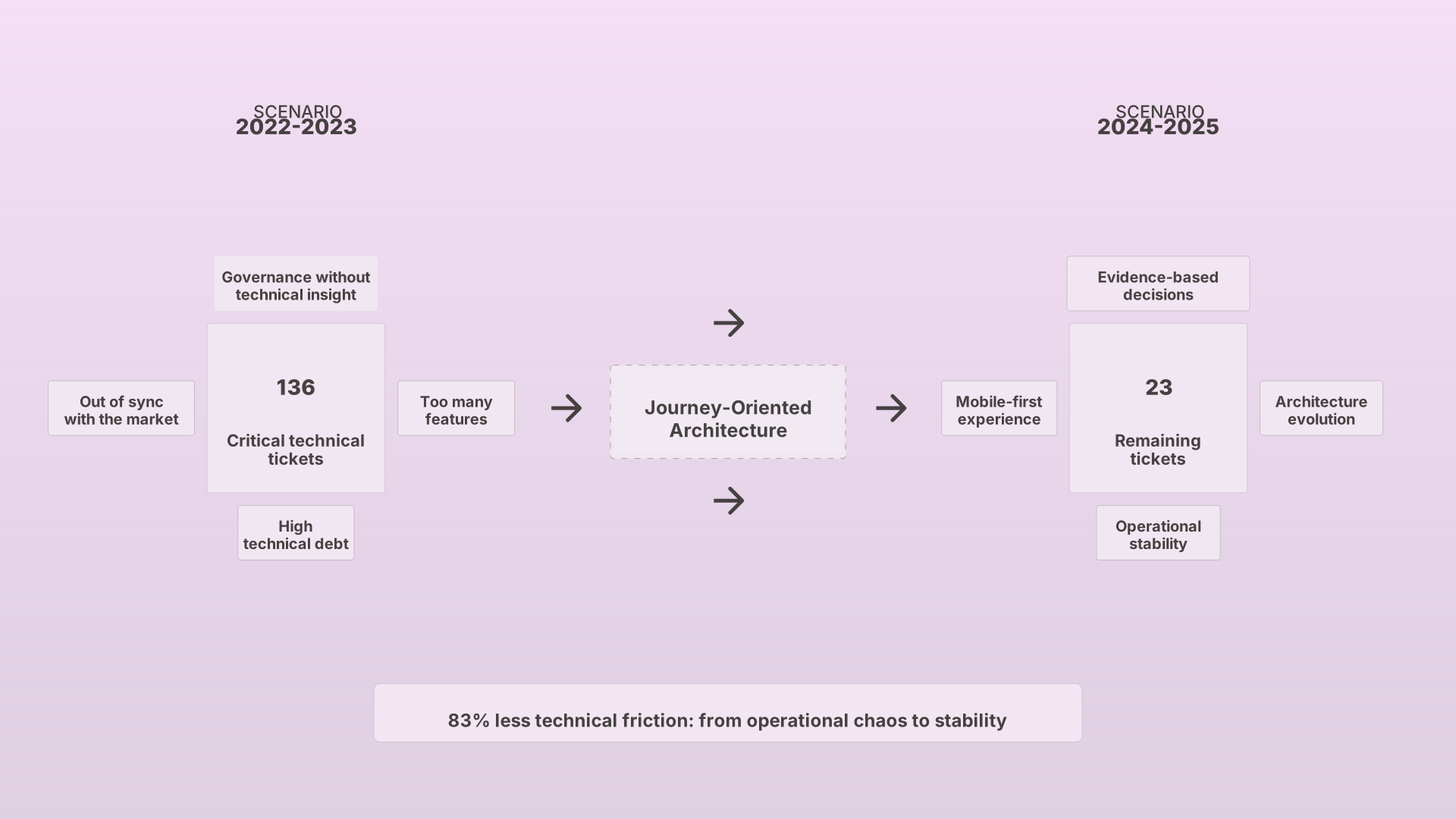
Market-share stabilization and operational efficiency
“Architecture is not just technical. It is the mechanism that determines how a business captures value and builds competitive advantage.”
Principles & Insights
- •Architecture: Systems shape the quality of future decisions.
- •Scale: Volume without signal capture is just operating cost.
- •Integration: Connected journeys create intelligence; silos create friction.
- •Sustainability: Modernizing the foundation is a prerequisite for continuous innovation.
- Operational-efficiency and critical technical-ticket reduction indicators are based on consolidated internal company data (help desk and operating systems) and are presented in aggregate.